Drylands Tortoises

Geometric Tortoises
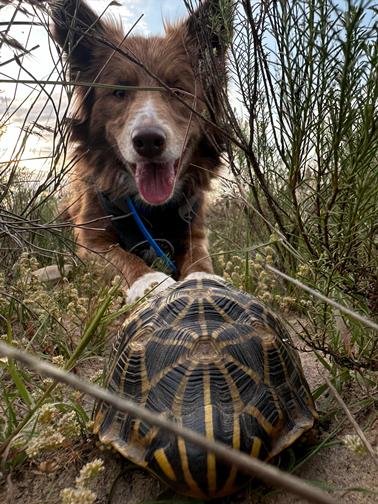
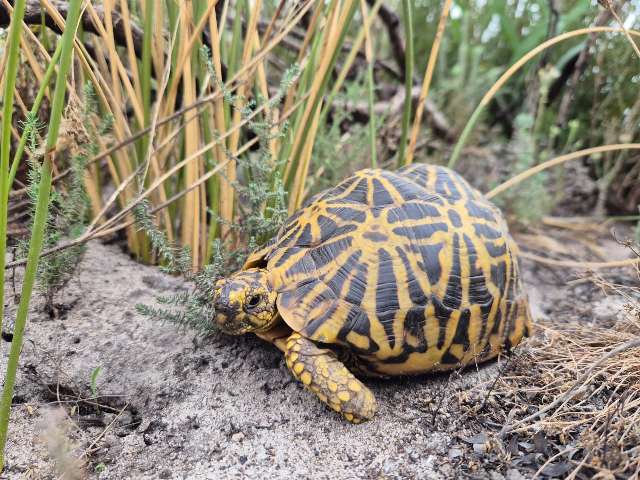
The EWT in partnership with Stellenbosch University, Southern Africa Tortoise Conservation Trust (SATCT) and Turtle Conservancy (TC) has launched a Masters project aimed at characterising the dietary preference of the geometric tortoise (Psammobates geometricus) by using DNA metabarcoding to extract plant DNA from their faeces. This species is critically endangered and endemic to the Western Cape and is the world's most endangered tortoise.
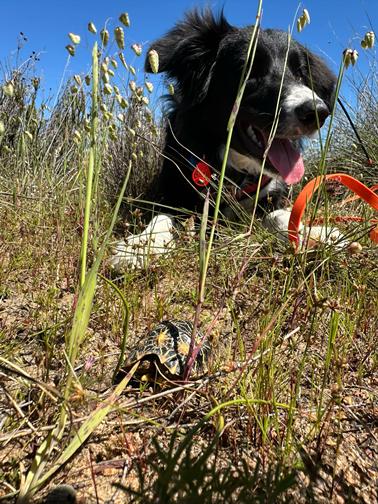
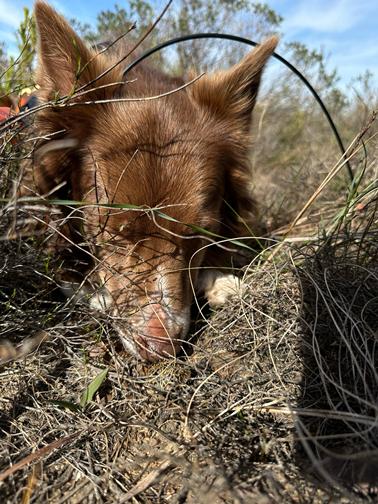
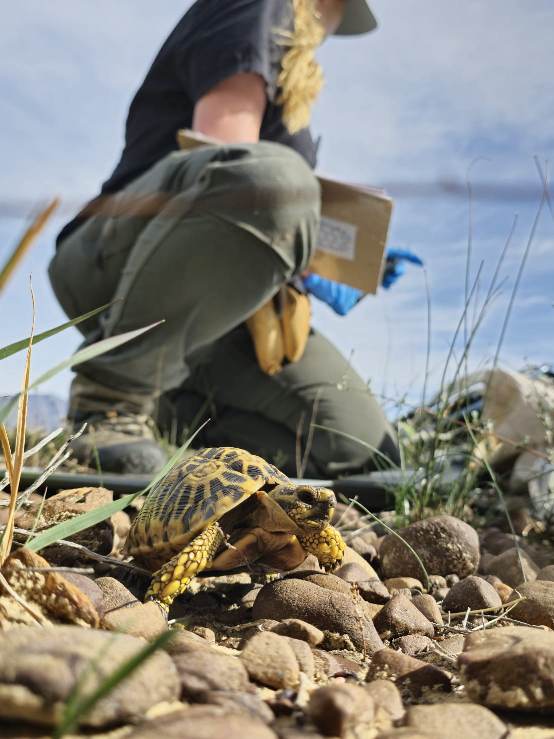
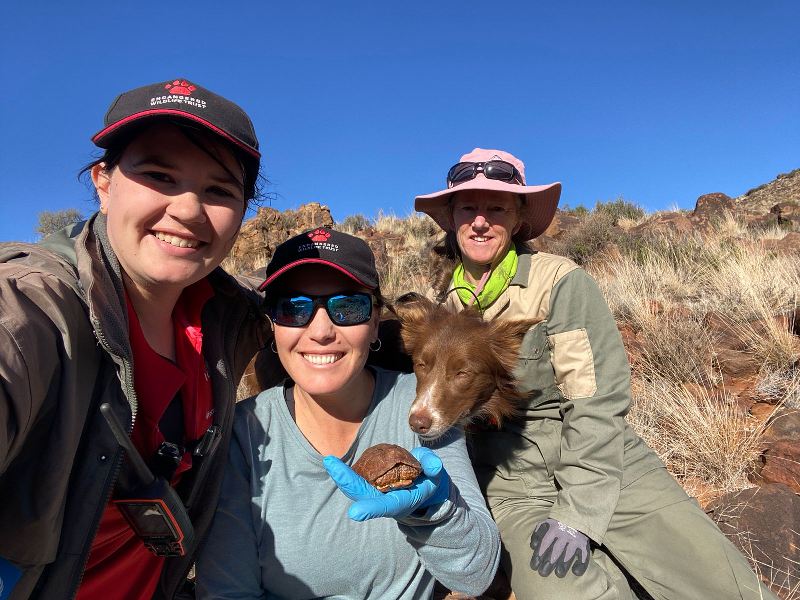
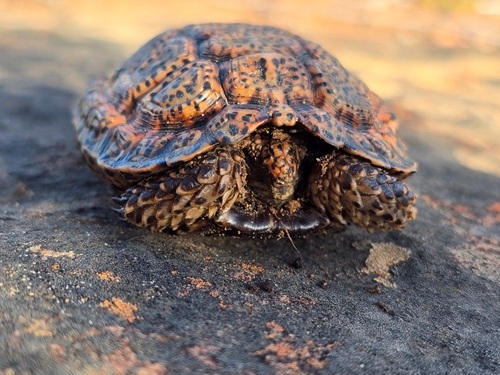
The geometric tortoise is very distinctive with its markings of yellow stripes on a black shell, with yellow and black mottled skin. The only species they can be confused with are the other Tent tortoises (Psammobates sp.) which also have stripes but have more pronounced tenting of their shells. There are a couple of small pockets of naturally occurring geometric tortoise populations left in the Western Cape occurring mostly on private farms and reserves. They only occur in Renosterveld vegetation, which itself is a critically endangered habitat, that is being reduced by cultivation and agricultural practices. These sites cannot be disclosed due to the high risk to the tortoise species, and their anonymity is important to us. The DNA metabarcoding to characterise the tortoise diet is the first of its kind for this species will help us to achieve a broader understanding of their dietary habits. These tortoises are mostly threatened by habitat loss due to agricultural activities and unsustainable cultivation practices. We are not 100% sure what other factors are causing their population to decline but what food they need to survive is a great starting point. The DCP team, including Delta and Dash (our scent detection dogs) have done multiple surveys on the site to find dead or alive tortoises of varying ages, which will be used to estimate the tortoise population size at the site. These population figures will form part of a larger initiative (Managed by the Southern Africa Tortoise Conservation Trust - SATCT) to establish population distribution range and to reduce the species conservation status. This project aims to simplify our understanding of the relationship between forage ecology and population trends for the geometric tortoise population, providing evidence-based recommendations for habitat management and long-term conservation planning, the dietary list will also be a great feeding tool for headstarting programs.

Dwarf Tortoises
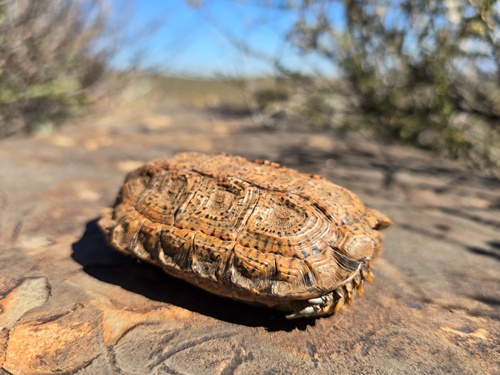
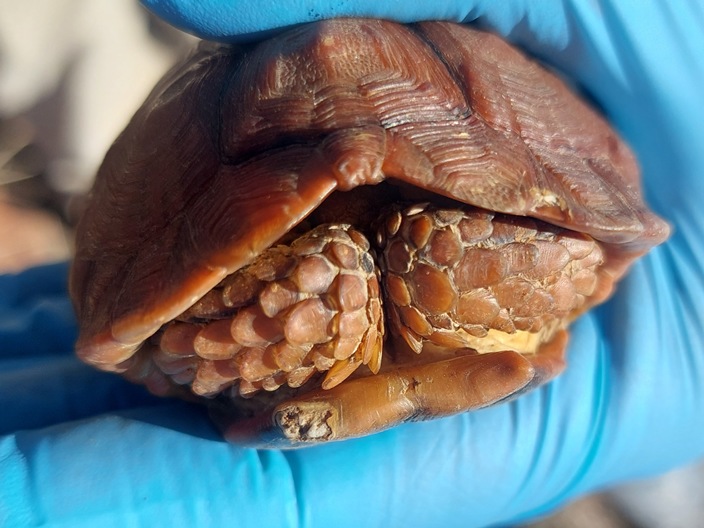
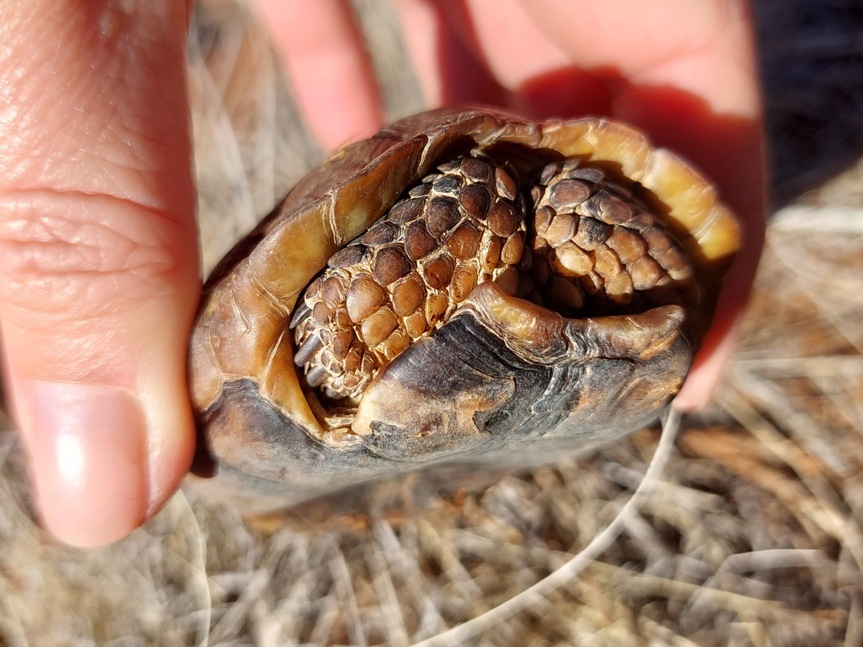
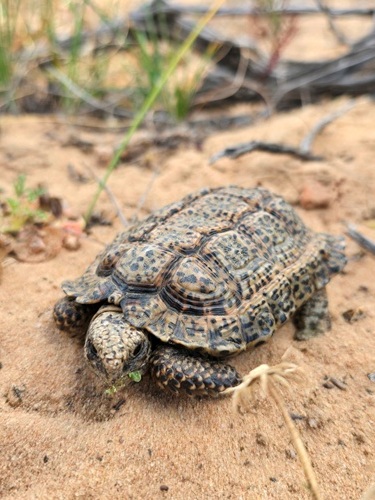
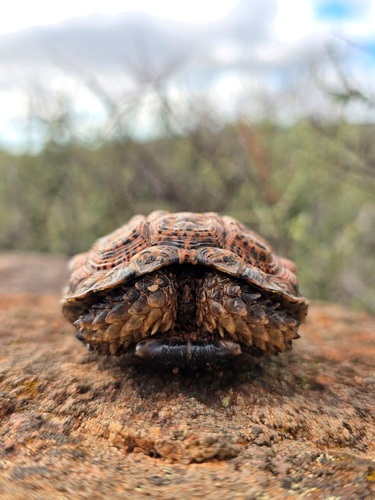
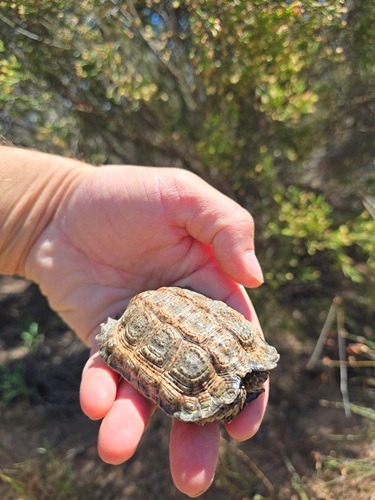
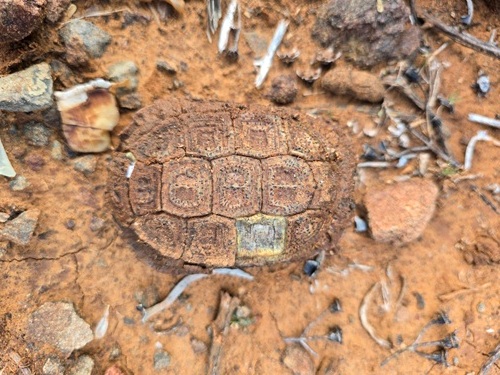
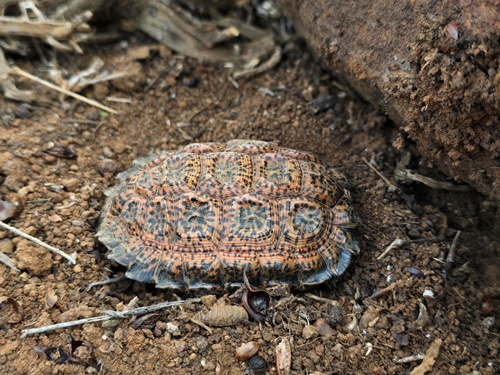
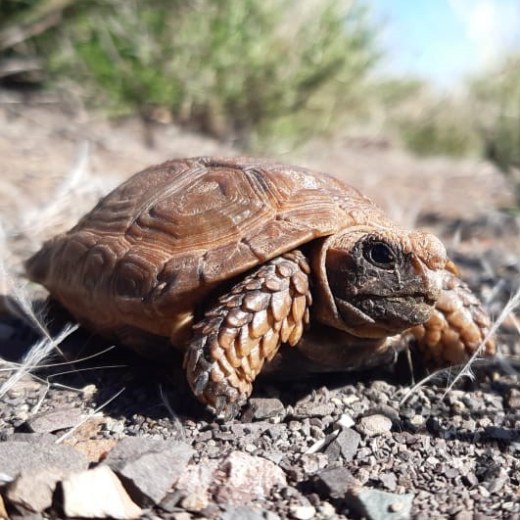
South Africa is home to at least 13 tortoise species – more than any other country in the world. Four of these are dwarf tortoises: Speckled Dwarf Tortoise (Chersobius signatus), Karoo Dwarf Tortoise (Chersobius boulengeri), Parrot-beaked Dwarf Tortoise (Homopus areolatus), and the Greater Dwarf Tortoise (Homopus femoralis). Two of these, the Speckled and the Karoo Dwarf Tortoise, are threatened, and the threats continue to increase.
The Speckled Dwarf tortoise is the world’s smallest tortoise species and is currently listed by the IUCN as Endangered, whereas the Karoo Dwarf Tortoise is listed as Critically Endangered. Both species have a big threat in common: Pied Crows (Corvus albus). We know that Pied Crows moved to the Succulent Karoo, Nama Karoo and Fynbos biomes - a change that was noticed in the 1990’s. This shift was mainly a result of the erection of telephone lines along the roads, which created a niche for Pied Crows in the form of nesting and perching sites. Pied Crows, like all Corvids, are extremely intelligent and opportunistic, which means they can solve complicated puzzles, including cracking open tortoise shells for food. People started noticing heaps of tortoise shells under Pied Crow nests, including those of the threatened Dwarf Tortoises. This is when the Drylands Strategic Conservation Landscape team from the Endangered Wildlife Trust launched a project, funded by die FONSECA Species Conservation Fund (re:wild), to investigate the impact of Pied Crows on Speckled Dwarf Tortoises in the Northern Cape. The project aimed to better understand crow behaviour in arid landscapes, specifically patterns in their movement across landscapes, nesting patterns, food preferences, and how to protect tortoises against crow predation. In some areas, crows are a major threat to both livestock and native wildlife. Three Australian Ladder Traps were installed on three different properties to trap and ethically cull Pied Crows at Speckled Dwarf Tortoise priority sites. Another activity of the project was to remove unused infrastructure, especially old windpumps and telephone poles. These structures are often used by Pied Crows for nest building. One landowner managed to remove a 14,5 km line of telephone poles at one of the tortoise priority sites. Finally, a management plan was developed to mitigate Pied Crows in the area.