Golden Moles
Golden moles (Chrysochloridae) are subterranean mammals endemic to sub-Saharan Africa. They are characterised by poor dispersal ability and, consequently, most species are seriously range-restricted and vulnerable to habitat fragmentation, degradation, and population isolation. This is especially true for the dune-dwelling species on the west coast of South Africa. Golden moles are recognised as indicator species in this area, as they feed on a variety of dune insects, which diminish in number as habitat quality deteriorates. The coastal dune habitats of the west coast have been extensively and severely impacted by alluvial diamond and mineral mining. The entire coastline is under threat from developments and proactive conservation planning is urgently required.
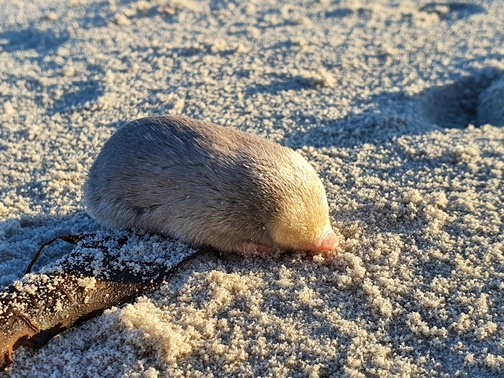
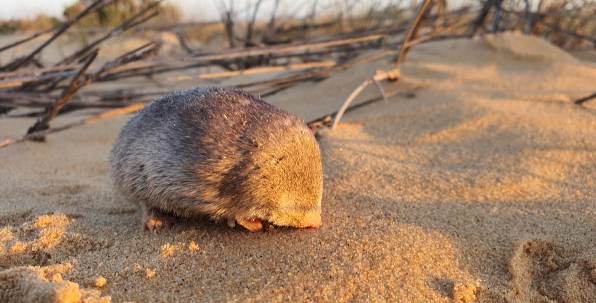
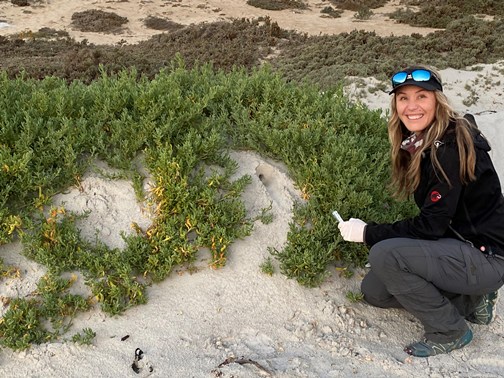
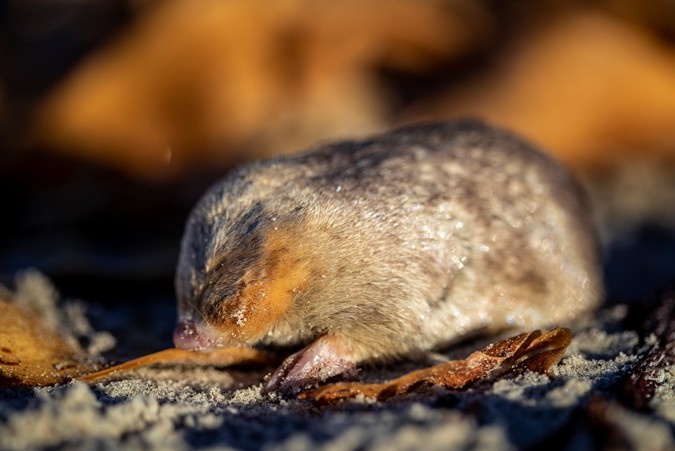
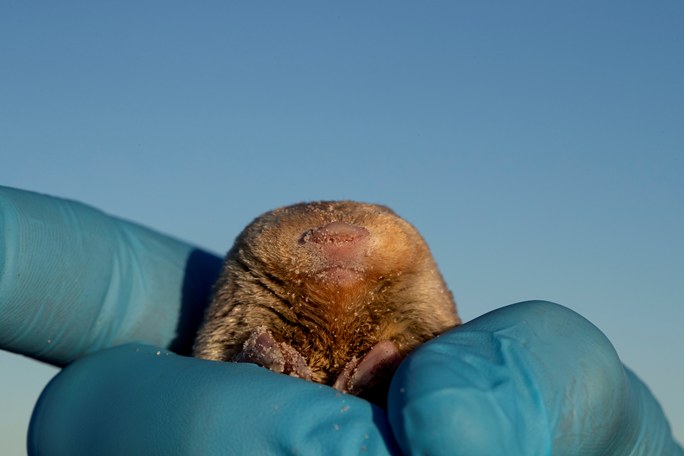
De Winton’s Golden Mole is listed as Critically Endangered on the IUCN Red List, and until recently was known only from Port Nolloth on the west coast of the Northern Cape Province of South Africa, where it was last recorded in 1937. This species is incredibly difficult to detect. Traditional methods to capture these animals previously required very high search efforts. However, our application of eDNA – which can detect genetic material in soil samples – has revolutionised the way we study golden moles, and enabled us to rediscover this “lost” species.
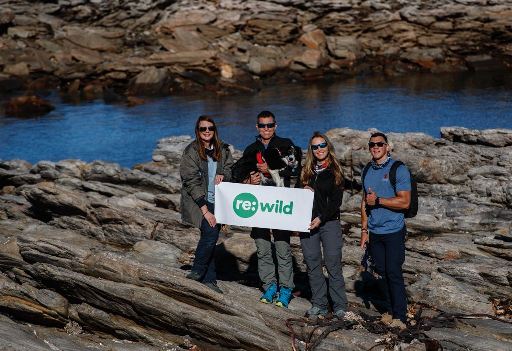
On 29 November 2023, we announced the rediscovery of De Winton’s golden mole, the 11th of the world’s most wanted lost species to be rediscovered since Re:wild’s Search for Lost Species was launched in 2017 { press release}. The research paper, “Environmental DNA from soil reveals the presence of a ‘lost’ Afrotherian species” {research article}, was published in the journal Biodiversity and Conservation.
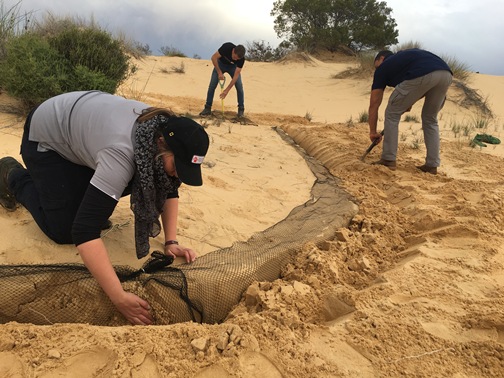
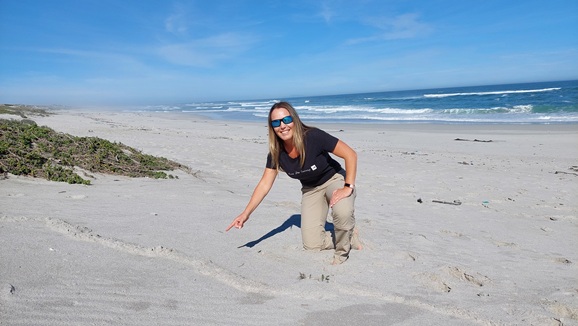
Our current work aims to further our understanding of golden mole distributions on the South African west coast, through extensive surveys of these coastal dune habitats, to collect environmental DNA (eDNA) and map golden mole distributions. The distribution data will directly contribute to species conservation by feeding into Environmental Impact Assessment (EIA) No-Go maps, which are mandatory during development consultations. Consequently, development will be prohibited in areas where the species is recorded. We are also involved in conservation work on the ground, identifying private/communal sites that may be eligible for declaration, conducting awareness and training workshops with the Northern Cape Department to alert landowners, communities and/or municipalities to the species’ presence, inform them of declaration options available to them, and provide information for better golden mole management.
GOLDMAP – Genomic and Occurrence-Level Data Mapping for All South African Golden Moles
The EWT is collaborating with Nelson Mandela University and other partners in a national NRF-funded project aimed at producing the first comprehensive, genetically verified, and spatially explicit dataset for all 17 golden mole species occurring in South Africa. Many of these species are characterized by high levels of endemism, cryptic diversity, and conservation concern. Many are threatened, Data Deficient, or poorly known, which hinders their inclusion in conservation planning, environmental assessment, and policy frameworks. By combining cutting-edge molecular tools, rigorous field surveys, and citizen science, this project will significantly advance knowledge of one of South Africa’s most evolutionarily distinct mammal families. The tangible outputs will directly strengthen biodiversity policy, environmental governance, and conservation action, while the intangible outcomes—such as heightened public interest, expanded professional networks, and improved conservation culture—will ensure lasting impact beyond the project’s lifetime.
Articles & Links
Press Release